What memory care costs in Connecticut and how families cover it
By Diego Cohen · Updated 2026-07-16
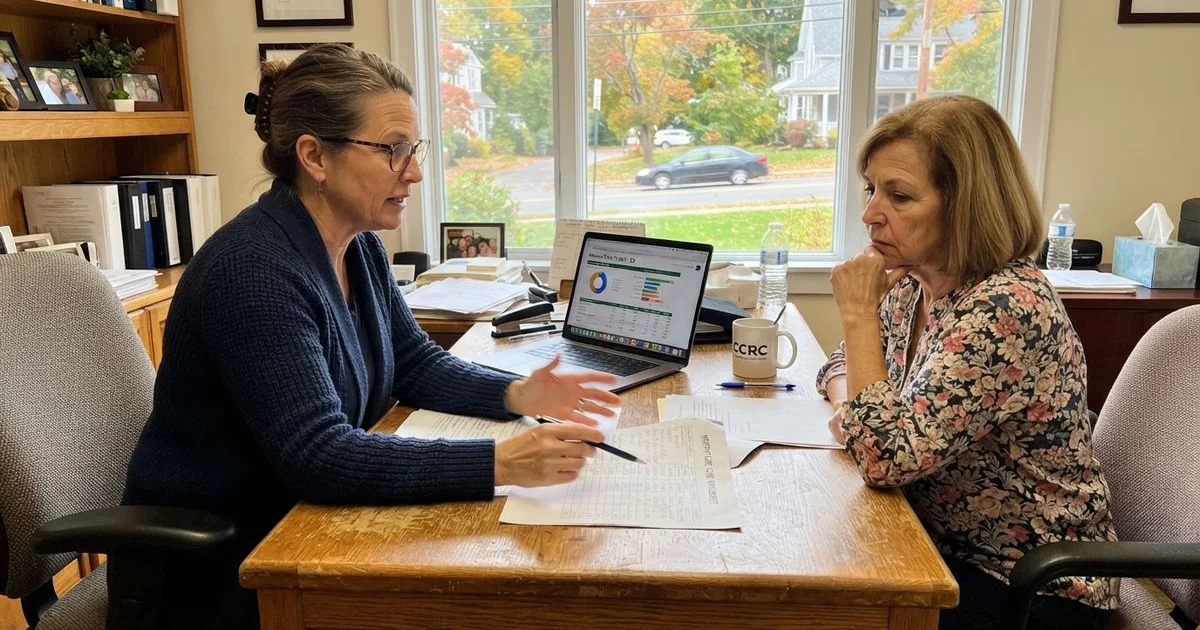
Cost is usually the first real obstacle families hit once they start seriously looking at memory care, and it is also the area where quotes are hardest to compare directly. Two communities can advertise the same “starting at” number and land in very different places once care level fees, room type, and add-ons are factored in. Here is what actually drives the price in Connecticut, and the payment sources people use to cover it.
What sets the base price
Three things move the number more than anything else: room type, care level, and location within the state. A shared room costs less than a private room, which costs less than a private suite. On top of that, most communities assess a resident’s needs at move-in and again periodically, then charge a care level fee layered on the base rate. Someone who is early-stage and mostly independent typically costs less than someone who needs significant daily assistance with bathing, dressing, and mobility.
Base rates for memory care assisted living in Greater New Haven typically start somewhere between $5,000 and $9,000 a month before those add-ons. Skilled nursing facilities that include a dedicated memory care unit run higher, often landing between $9,000 and $13,000 a month, since they carry the cost of round-the-clock licensed nursing staff on top of the dementia-specific programming.
Table: how the pieces add up
| Cost component | What it covers | What changes it |
|---|---|---|
| Base monthly rate | Room, meals, standard staffing, activities | Room type (shared, private, suite) |
| Care level fee | Hands-on assistance with bathing, dressing, mobility | Assessed need, reassessed over time |
| Community fee | One-time move-in fee at many communities | Varies by operator, sometimes negotiable |
| Skilled nursing add-on | Licensed nursing, medication management, therapy | Whether the setting is assisted living or skilled nursing |
Ask every community for a written breakdown of these pieces rather than relying on the number quoted over the phone. A “starting at” price rarely reflects what a family ends up paying once a real care level assessment is done.
How families actually pay for it
Private pay covers most memory care stays in this region, at least at first. Beyond that, a few sources come up repeatedly:
- Long-term care insurance. If a family member purchased a policy years ago, it can cover a meaningful share of memory care costs. Read the policy for what triggers coverage, since many require documented help with a certain number of daily living activities before benefits kick in.
- VA Aid and Attendance. Veterans and surviving spouses may qualify for a monthly benefit that helps offset the cost of memory care, on top of any standard VA pension.
- Medicaid, mainly through Medicaid-certified skilled nursing beds once a resident meets financial and medical eligibility, often after a period of private pay or a spend-down of assets.
- Medicare, in a narrow way, covering a qualifying short-term rehab stay but not ongoing custodial memory care.
Adult day programs and in-home caregiving hours are worth comparing against full residential memory care too, since they can extend the timeline before a full move is financially necessary. Pricing quotes vary enough between individual communities that the ranges above are only a starting point for your own comparison.
Why the price changes after move-in
Even families who compare quotes carefully are sometimes surprised by a rate increase a few months into a placement. This usually traces back to the care level reassessment built into most contracts: as a resident’s dementia progresses and they need more hands-on help with bathing, dressing, or mobility, the community reassesses and adjusts the care level fee accordingly. It is a normal part of how memory care pricing works, not necessarily a sign of a hidden fee, but it does mean the number you sign up for at move-in is rarely the number you pay a year later. Ask specifically how often reassessments happen and what the typical increase has looked like for other residents, since that history tells you more than a policy description alone.
Questions worth asking before you sign anything
Before comparing a final number across communities, get clarity on: whether the quoted rate already includes the care level assessment or gets added after move-in, how often rates increase and by how much historically, what triggers a jump to a higher care tier, and whether a community fee is refundable if a placement doesn’t work out. Our methodology page explains how we weigh cost transparency and family-reported experience when scoring providers, which is worth a look before you start touring in person. For the full list of communities we track, start from the home page.
This is general information, not financial advice. Confirm exact pricing, fees, and what’s included directly with each community, and talk to a benefits counselor about what you may qualify for.
Frequently asked questions
- What is a typical starting monthly rate for memory care in Connecticut?
- Base rates for memory care assisted living in this region typically start somewhere in the $5,000 to $9,000 range before add-ons, with the final number shaped by room type and how much daily assistance the resident needs. Skilled nursing with memory care runs higher, often $9,000 to $13,000 a month, because of the added licensed nursing staff.
- Does Medicare pay for memory care?
- Rarely for the ongoing stay itself. Medicare can cover a short-term skilled nursing or rehab stay after a qualifying hospitalization, but it does not pay for long-term custodial memory care, whether that's in an assisted living community or a nursing home.
- Will Medicaid cover memory care in Connecticut?
- It can, but mainly within Medicaid-certified skilled nursing facilities once a resident meets both medical and financial eligibility. Standalone assisted living memory care is generally private pay in this state, though some waiver programs can offset specific services.
- What is the base rate plus care level pricing structure I keep hearing about?
- Most memory care communities charge a base monthly rate for room and standard services, then add a care level fee based on an assessment of how much hands-on help a resident needs. That add-on can increase over time as needs grow, so ask upfront how often reassessments happen and how much a care level increase typically costs.