Choosing an adult day program for dementia: questions to ask before you enroll
By Diego Cohen · Updated 2026-07-30
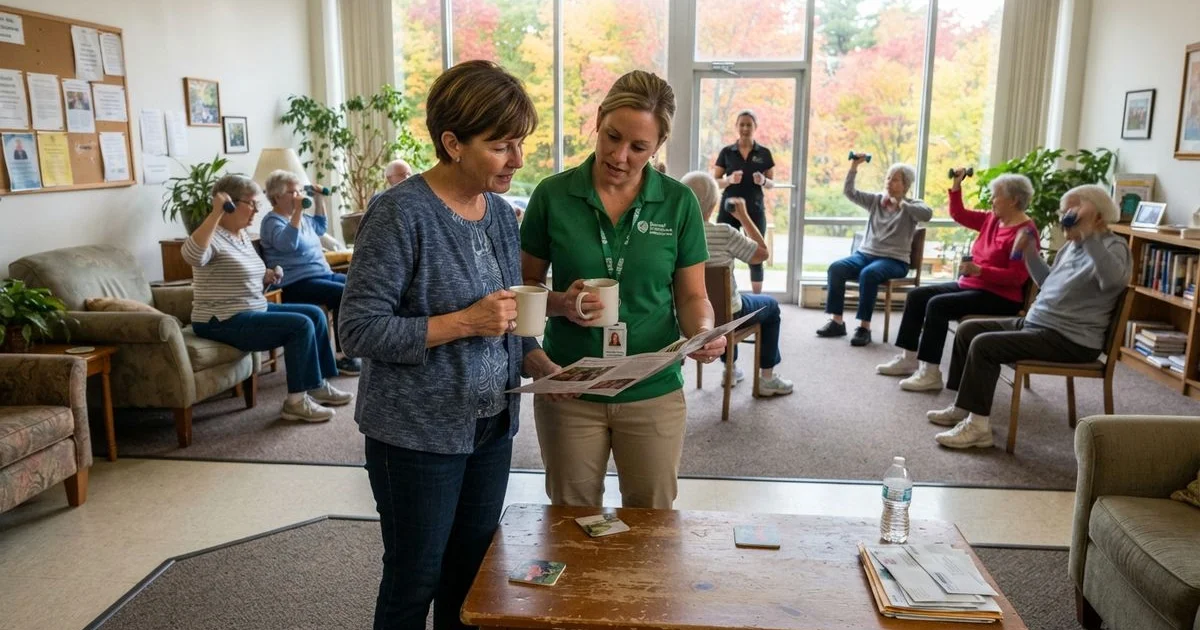
Enrolling a loved one in an adult day program is often the first structured care decision a family makes, well before anyone is thinking about a residential move. Getting the right fit matters, both for your loved one’s day and for the relief it’s supposed to give you as a caregiver. A mismatched program can mean resistance every morning and no real benefit for anyone.
Start with what a typical day looks like
Ask the program to walk you through an actual daily schedule, not a sample brochure version. A good program usually mixes structured group activities (music, exercise, art, reminiscence-based conversation) with quieter downtime, a hot meal, and medication reminders if needed. Ask specifically what happens between activities, since unstructured gaps are often where agitation or wandering behavior shows up.
Staffing and training matter more than amenities
The nicest building with the weakest staff-to-participant ratio is still the weaker choice. Ask how many staff are on the floor per participant, whether that ratio changes during transitions like arrival and pickup, and how much dementia-specific training staff have completed beyond general caregiving certification. Ask directly how they handle agitation, resistance to an activity, or a participant who wants to leave, since the answer tells you whether the program is genuinely equipped for dementia or just accepting clients with it.
Table: the comparison checklist
| Category | What to ask | Why it matters |
|---|---|---|
| Staffing | Staff-to-participant ratio, especially during transitions | Directly affects supervision quality |
| Training | Dementia-specific training, not just general aide certification | Predicts how well staff handle behavioral symptoms |
| Safety | How is wandering risk managed? Secured exits? | Prevents the most serious safety incidents |
| Daily structure | What does a typical day actually look like, hour by hour? | Reveals whether activities are individualized or generic |
| Transportation | Is pickup and drop-off included, and what’s the service radius? | Affects whether the program is workable long-term |
| Flexibility | Can days per week change as needs shift? | Lets the arrangement grow with your loved one’s needs |

Visit at the right time
A scheduled tour tends to show a program at its best. If you can, ask to visit again around midday, when you can watch a real activity or a meal in progress rather than an empty room described to you. Watch how staff redirect a participant who seems confused or resistant, since that single interaction often tells you more than anything in the brochure.
Transportation is a bigger deal than it sounds
For a lot of families, whether someone can actually get to and from the program each day matters as much as the program itself. Ask whether transportation is door-to-door or curb pickup, what the service radius is, and whether a second staff member rides along for participants who need mobility assistance. Some programs bundle this into the daily rate; others bill it separately, so confirm which applies before comparing prices across programs. For a full cost breakdown against residential memory care, see adult day programs vs. memory care communities.
What a good first day looks like
The first drop-off is often harder on the caregiver than on the person attending, even when it goes reasonably well. A program that handles this transition thoughtfully will have a specific plan for arrival, greeting your loved one by name, offering a familiar activity right away, and giving staff a heads-up on anything that helps with a smooth start, like a favorite topic of conversation or a specific way they prefer to be addressed. Ask what the program does differently on someone’s first few visits compared to a regular day, since a program with no real answer to this question likely treats every day, and every participant, the same way.
Give it a real trial before deciding
A rough first week or two is common and doesn’t necessarily mean the program is a bad fit. Give it a fair trial, stay in close contact with staff about how your loved one is adjusting, and don’t hesitate to try a different program if resistance continues well past the initial adjustment period. Our methodology explains how we score adult day programs on staffing, safety, and family feedback, and you can compare every option we track from the home page.
Frequently asked questions
- What's different about a dementia-specific day program versus a general senior day program?
- A dementia-specific program is staffed and secured for wandering risk, with trained staff who use redirection techniques rather than correction, and activities designed around different cognitive stages. A general program may accept someone with mild dementia but isn't necessarily set up for more advanced behavioral symptoms.
- How many days a week should we start with?
- Many families start with two or three days a week to see how their loved one adjusts, then add days if it's going well and more relief is needed. Starting smaller also makes it easier to switch programs if the first one isn't the right fit.
- What if my loved one resists going at first?
- Initial resistance is common, especially in the first few visits. Ask the program how they handle a difficult drop-off, and give it a few weeks before deciding it isn't working, since many people settle in once the routine becomes familiar.
- Should I visit more than once before enrolling?
- Yes, if you can. A scheduled tour shows you the pitch; visiting again at midday, when you can observe an activity or lunch in progress, shows you the program's actual daily rhythm and how staff interact with participants when they're not expecting a visitor.