What to expect on a memory care tour, and how to read what you see
By Diego Cohen · Updated 2026-07-27
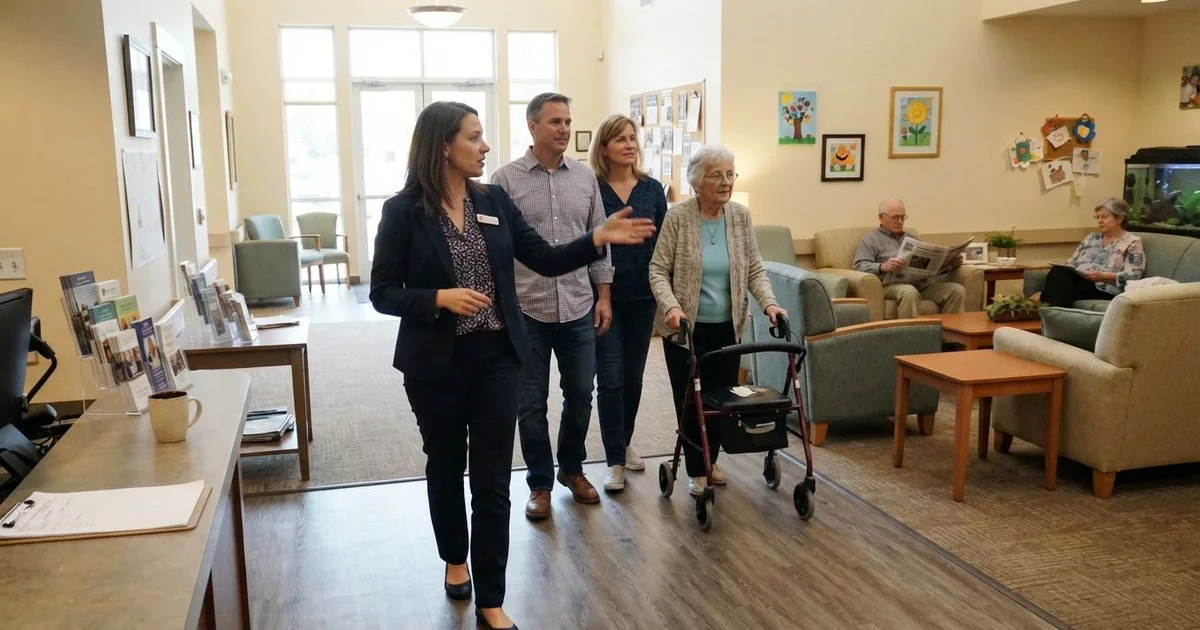
A memory care tour is part sales pitch and part diagnostic visit, and the two can be hard to separate in the moment. A well-run community will show you a clean lobby, a friendly staff member, and a resident enjoying an activity. All of that can be true and still not tell you much about what a Tuesday at 4pm looks like when staffing is thinner and the sales team isn’t watching. Knowing what to look for ahead of time helps you see past the polish.
Before you arrive
Call ahead to ask what time activities are scheduled and whether you can time your visit around a meal or a group activity, since that shows you real interaction rather than an empty common room. Bring a written list of questions so you don’t rely on memory once you’re there, and consider a second visit at a different time of day, ideally later in the afternoon when sundowning behaviors are more likely to show up.
What to look at while you’re there
Walk the memory care assisted living unit itself, rather than only the general senior living areas, if the community offers multiple levels of care. Pay attention to the physical layout: secured exits, whether hallways are confusing or easy to navigate, and whether outdoor space is fenced and accessible. Watch how staff talk to residents, and how they talk to you. Genuine warmth tends to show up in small moments, like a staff member using a resident’s name without being prompted or adjusting a blanket without being asked.
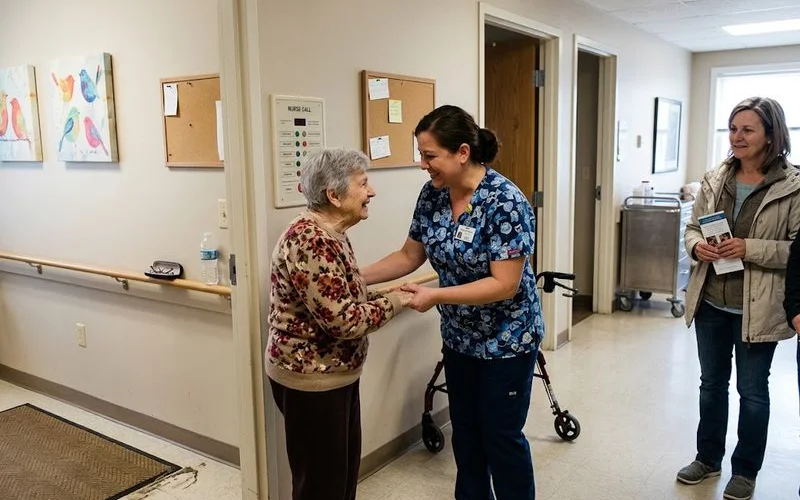
Table: what to ask, and who should answer it
| Topic | Question to ask | Who should answer it |
|---|---|---|
| Staffing | What’s the overnight staff-to-resident ratio? | Director of nursing or administrator |
| Training | How much dementia-specific training do aides get, and how often? | Memory care program director |
| Behavior | How do you handle agitation or resistance to care? | Nursing or program director |
| Pricing | What’s included in the base rate, and what triggers a care level increase? | Admissions or business office |
| Transitions | What happens if my loved one’s needs increase significantly? | Director of nursing |
| Family communication | How and how often will I hear about changes in condition? | Administrator or nursing director |
If admissions staff can’t answer the clinical questions, that’s not necessarily a red flag on its own, but insist on a follow-up with someone who can before you commit to anything.
Reading the room instead of the brochure
Notice the residents themselves as much as the staff. Do they look engaged, or is the common area mostly quiet with a television running? Check bathrooms and hallway corners away from the main lobby, since cleanliness there tends to be a more honest signal than the entrance. Ask a staff member, out of earshot of the sales team if possible, how long they’ve worked there. High turnover among the people you’re meeting is one of the clearest predictors of inconsistent care down the line.
Smell, sound, and the small stuff
A few senses tell you more than a full walkthrough can. Notice what the building smells like as soon as you walk in, and again in the memory care unit itself; a masking scent of air freshener over an underlying odor is worth more attention than a clean-smelling entrance alone. Listen for the noise level in common areas, since a unit that feels chaotic or unusually quiet can both signal something about staffing or programming. Look at how residents are dressed and groomed across the whole floor, not only the one or two you happen to meet, since that consistency is a decent proxy for how attentive daily care actually is.
After the tour
Compare notes across every community you visit while the details are still fresh, since tours tend to blur together after the third or fourth one. If a second visit is possible, especially one that includes your loved one, use it to see how they respond to the space and the people, not just how the space looks to you. If you are earlier in the process and weighing an adult day program instead of a residential move, choosing an adult day program for dementia walks through a similar list of questions to ask. Our methodology explains the factors we weigh when scoring communities, which can help you narrow down which ones are worth touring in the first place. You can browse the full list of providers we track from the home page.
Frequently asked questions
- Should I bring my loved one on the first tour?
- It depends on how they're likely to react to an unfamiliar environment. Some families do a first tour alone to screen out communities that clearly won't work, then bring their loved one back for a second visit somewhere that felt right, ideally during a mealtime or activity so they can see other residents engaged.
- How long does a typical tour take?
- Plan for 45 minutes to over an hour for a thorough visit, longer if you stay to see a meal or activity in progress. A tour that feels rushed, or where staff seem eager to move you along quickly, is worth noting as its own data point.
- Is it okay to show up unannounced?
- Some communities allow drop-in visits, and it can be a useful second data point after a scheduled tour, since it shows you the environment without advance preparation. Ask about their visitor policy directly; a community that's uncomfortable with unannounced visits is worth a second look.
- What if the sales staff can't answer clinical questions?
- That's common, since sales and admissions staff aren't always clinical staff. Ask to speak with the director of nursing or the memory care program director for questions about staffing ratios, medication management, and how they handle behavioral symptoms.