When a parent refuses memory care: what actually helps
By Diego Cohen · Updated 2026-08-14
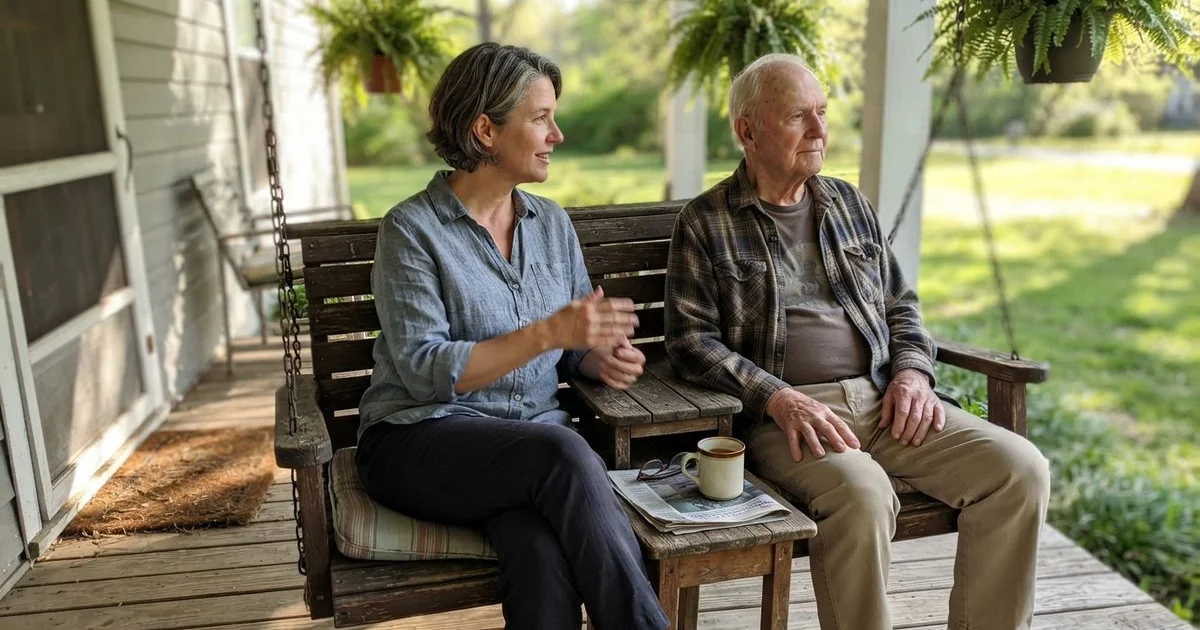
A parent’s refusal to consider memory care is one of the most common and most exhausting obstacles families run into. It can feel like a wall you keep hitting the same way every time, and arguing about facts, memory lapses, safety incidents, a diagnosis, rarely moves the conversation forward the way it would with someone whose reasoning wasn’t affected by the condition itself.
Why logical arguments usually don’t work
Dementia can affect a person’s ability to recognize their own decline, a condition called anosognosia. This is different from denial in the everyday sense. A parent insisting nothing is wrong isn’t necessarily being difficult; their brain may genuinely not be registering the changes you and others are observing. Understanding this can take some of the personal sting out of repeated refusal, even if it doesn’t make the day-to-day situation any easier.
Approaches that tend to work better than arguing
Rather than presenting evidence and expecting agreement, many families find more success meeting the emotional concern underneath the refusal. A parent resisting memory care is often afraid of losing independence, being forgotten, or leaving a home full of memories, not actually disputing the facts you’re presenting. Addressing that fear directly, rather than the factual disagreement, tends to open more doors.
Framing a first visit softly also helps. Calling it a tour “just to see options” rather than an announcement of a final decision reduces the sense of confrontation. Some families involve a trusted third party, a physician, clergy member, or old friend, since a parent may hear the same message differently from someone outside the immediate family dynamic.
It also helps to accept that one conversation is unlikely to resolve this. Many families describe a slow shift over weeks or months, with a parent’s resistance softening gradually rather than all at once after a single well-timed talk. Treating each conversation as one step rather than a make-or-break moment tends to reduce pressure on both sides and makes it easier to try a different approach next time if the current one isn’t landing.
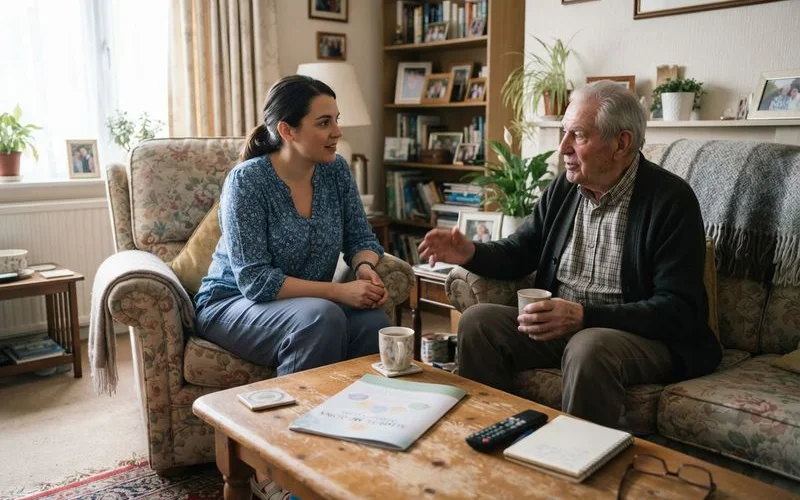
Table: what tends to help, and what tends to backfire
| Approach | Why it often backfires or helps |
|---|---|
| Listing memory lapses as proof | Can feel like an attack; rarely changes the parent’s self-perception |
| Framing it as “just visiting” | Lowers the stakes and resistance for a first tour |
| Involving a trusted outside voice (doctor, clergy, old friend) | Sometimes lands differently than family pressure |
| Focusing on their underlying fear (losing independence, home) | Addresses the real resistance rather than the surface argument |
| Ultimatums or repeated confrontation | Tends to entrench resistance further |
When refusal becomes a safety issue
If a parent’s refusal is putting them in real danger, unsafe wandering, medication errors, a fire risk, and they still have legal capacity to make their own decisions, families are often stuck between respecting autonomy and addressing safety. This is the point to loop in the parent’s physician, who can assess capacity and sometimes deliver a message about safety that lands differently coming from a doctor than from an adult child. An elder law attorney can also explain what legal options, like guardianship, might apply if capacity has genuinely declined to the point where the parent can’t make informed decisions.
Timing the conversation matters as much as the words
Bringing up memory care right after a difficult event, a fall, a hospital visit, an argument, tends to go worse than raising it during a calmer stretch, even though the crisis is often what makes the conversation feel urgent. If you have any flexibility in timing, choose a moment when your parent is rested, not hungry or overtired, and when you’re not also managing a separate stressful situation in the background. Short conversations spread across several days often land better than one long, high-stakes discussion, since a parent with dementia may need the idea introduced more than once before it starts to feel familiar rather than alarming.
If you do get to a tour
Once a parent agrees to visit, even reluctantly, focus the visit on something concrete they might respond to, meeting a resident their age, seeing an activity they’d enjoy, rather than a full sales pitch. Once a move actually happens, it’s common for guilt to resurface on your side of the decision; helping an aging parent move into memory care without drowning in guilt covers where that feeling comes from. Our methodology explains what we look at when scoring communities, and the home page has the full list of options across the region if you’re ready to start comparing.
Frequently asked questions
- Why does my parent insist nothing is wrong when it clearly is?
- This can be a symptom of dementia itself, called anosognosia, where the condition affects a person's ability to recognize their own decline. It isn't stubbornness or denial in the usual sense; the brain changes causing memory loss can also affect self-awareness, which is why logical arguments often don't land.
- Should I lie to get my parent to agree to a tour?
- Many families use gentler framing rather than a direct falsehood, calling it a visit to see a friend's new place or checking out a community for 'someday' rather than announcing it as a final decision. Whether that crosses into deception is a personal call, but avoiding a confrontational buildup tends to work better than a head-on argument.
- What if my parent has the legal capacity to refuse and simply won't go?
- If a parent retains legal decision-making capacity, their refusal generally has to be respected unless there's a safety emergency or a court has granted guardianship. This is a hard reality for many families, and it often means working with a physician or elder law attorney to understand what options exist.
- Does resistance usually continue after move-in?
- It's common for resistance to ease within the first few weeks as a routine sets in, though not universal. Some residents adjust faster than families expect once they have structure, social contact, and staff attention; others take longer, which is part of why choosing a community with strong training in this specific transition matters.