Helping an aging parent move into memory care without drowning in guilt
By Diego Cohen · Updated 2026-08-12
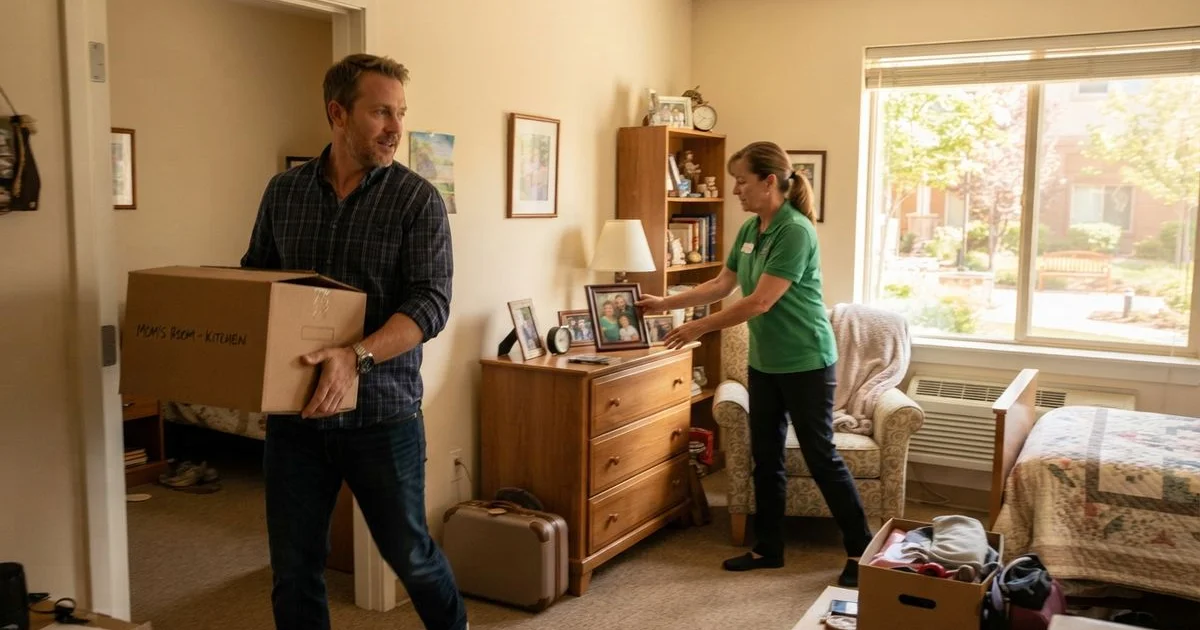
The logistics of a memory care move, tours, paperwork, moving furniture, are often more straightforward than the emotional weight behind them. Guilt shows up early and stays late in this process, frequently disconnected from whether the decision itself is the right one. Understanding where that guilt comes from can make it easier to move through it rather than let it stall a decision that safety already requires. If your parent is also resisting the idea outright, when a parent refuses memory care covers approaches that tend to work better than arguing.
Where the guilt actually comes from
For a lot of adult children, guilt is tied to a promise made years ago, “I’ll never put you in a home,” made before either of you understood what memory care actually involves or what your parent’s needs would become. That promise was made with good intentions and without the information you have now. Recognizing that the promise was made under different circumstances doesn’t erase the guilt, but it can loosen its grip enough to make a clear-eyed decision.
Guilt can also come from comparison: a sibling who seems less conflicted, a friend who cared for a parent at home until the end, a cultural or family expectation that caregiving stays within the family no matter what. None of these comparisons account for your specific situation, your parent’s specific needs, or what’s sustainable for your own health and life.
The decision that’s actually in front of you
The real choice usually isn’t between memory care and things staying the same. It’s between memory care and a home situation that has already become unsafe, or a caregiver who is running out of capacity to keep going. Framing the decision this way, memory care versus an unsustainable status quo, rather than memory care versus an idealized alternative, tends to make the guilt easier to sit with.
Table: reframing common guilt triggers
| What you’re feeling guilty about | A more accurate way to see it |
|---|---|
| “I promised I’d never do this” | That promise was made without knowing what care would actually be needed |
| “A good child would handle this at home” | Safety and consistent care matter more than where care happens |
| “My parent will think I abandoned them” | A secured, supportive community isn’t abandonment; it’s a different kind of care |
| “I should be able to do this myself” | Caregiver burnout puts both you and your parent at risk |
Getting the family on the same page
Disagreement among siblings or other family members is common, and it often has less to do with the facts of the situation and more to do with each person’s own guilt or grief processing at a different pace. Sharing specific safety incidents, rather than a general sense that “it’s time,” tends to move these conversations forward more than abstract arguments do. If the family is stuck, a family meeting with the parent’s physician or a geriatric care manager can sometimes provide the outside perspective that breaks a stalemate.
What actually helps in the first few weeks
The period right after move-in tends to be the emotional low point for both a parent and the adult child who arranged it, which can make guilt feel like confirmation that the decision was wrong. It usually isn’t. A short adjustment period, marked by confusion, occasional resistance, or a parent asking to go home, is common and often eases as routine and familiarity build. Short, calm visits in the first couple of weeks tend to help more than long ones, since a parent adjusting to a new environment can find extended visits overstimulating. Checking in with staff about how your parent is settling in, rather than relying only on your own read of a single visit, gives you a fuller picture than guilt alone will let you see clearly.
Staying connected after the move
Guilt often peaks right around move-in day and eases as a new routine takes hold, both for your parent and for you. Regular visits, staying involved in care plan reviews, and simply being present matter more long-term than the fact that you’re no longer providing hands-on daily care. Many families describe getting to be a son, daughter, or spouse again, rather than a full-time caregiver, as one of the unexpected gifts of the transition. Our home page lists every memory care community we track across the region, and our methodology explains how we score them if you’re still comparing options.
Frequently asked questions
- Is it normal to feel guilty even when I know it's the right decision?
- Very. Guilt often has more to do with a broken promise, whether spoken or implied, to never move a parent into a facility, than with whether the decision itself is sound. Most adult children who make this move describe the same feeling, even when the outcome clearly improves their parent's safety and quality of life.
- How do I handle it if other family members disagree with the decision?
- Try to separate emotional disagreement from practical disagreement. If someone objects because they haven't seen the safety incidents firsthand, sharing specifics can help. If the disagreement is more about guilt or grief than logistics, that may need its own conversation, separate from the placement decision itself.
- Will my parent forgive me for this?
- Many families report that a parent's resistance softens once they settle into a routine, particularly if the community offers structure and social connection that was missing at home. That said, dementia can make it hard for a parent to remember or process the decision the way you experienced it, which is its own kind of hard.
- How do I stay involved after the move without feeling like I've handed everything off?
- Regular visits, staying in contact with the care team, and attending care plan reviews all keep you meaningfully involved. Many families find that the relationship actually improves once they're no longer the primary caregiver managing every daily task, and can go back to being a son, daughter, or spouse during visits.