Memory care for veterans: VA benefits and options in Connecticut
By Diego Cohen · Updated 2026-08-18
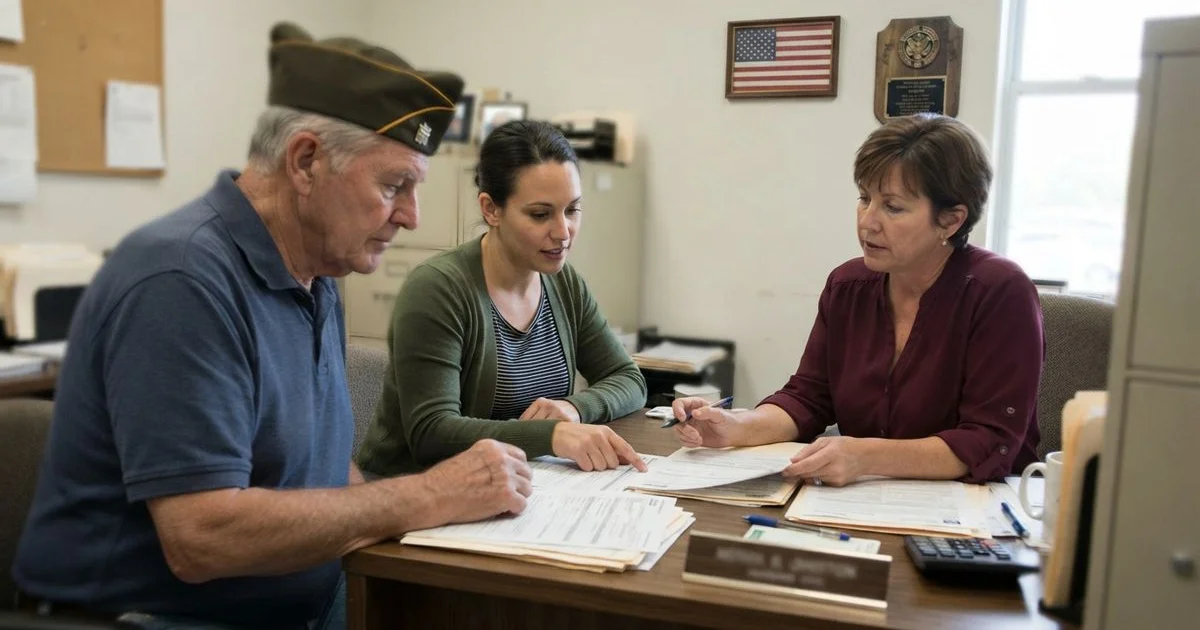
Veterans and surviving spouses facing a memory care decision have benefit options that often go unused, either because families don’t know they exist or assume the application process isn’t worth the effort. For a veteran with wartime service and a qualifying medical need, VA benefits can make a real difference in what’s affordable.
VA Aid and Attendance, explained
Aid and Attendance is a benefit added on top of a standard VA pension for veterans or surviving spouses who need help with daily activities, bathing, dressing, supervision due to cognitive decline, or are housebound. It’s specifically designed to help offset the cost of long-term care, including memory care, and it doesn’t require the veteran to have a service-connected disability, only qualifying wartime service and a demonstrated care need.
The benefit is paid monthly and can be used toward memory care assisted living, skilled nursing, in-home care, or adult day programs, whichever setting the veteran or spouse is actually using. It’s added to the base pension rather than replacing it, so it’s worth applying for even if the base pension amount alone wouldn’t make much difference.
Who typically qualifies
Eligibility generally requires the veteran served during a wartime period (specific date ranges apply and change occasionally, so confirm current requirements), meets income and asset limits after deducting medical expenses, and has a medical need for assistance that a physician can document. Surviving spouses of qualifying veterans may also be eligible under similar terms.
Medical expenses, including the ongoing cost of memory care itself, can be deducted when the VA calculates countable income, which is part of why families sometimes see their eligibility improve once a resident is actually in a paid care setting. This can catch people off guard: a veteran who didn’t qualify based on income alone before a placement may qualify once care costs are factored in, so it’s worth reapplying or asking a claims agent to recheck eligibility after a move rather than assuming an earlier denial is final.
Table: what to have ready for the application
| Document | Why it’s needed |
|---|---|
| DD-214 or equivalent discharge papers | Verifies wartime service |
| Physician’s statement of need | Documents the medical basis for the benefit |
| Financial records (income, assets, medical expenses) | Determines benefit eligibility and amount |
| Marriage certificate (for surviving spouse claims) | Verifies eligibility as a surviving spouse |
| Current memory care costs, if already placed | Supports the claim for the monthly benefit amount |

Getting help with the application
County veteran service officers and VA-accredited claims agents can help prepare and file an application at no cost, which matters given how document-heavy the process can be. Starting early is worth emphasizing: claims can take several months to process, so beginning the application before the benefit is financially urgent gives the process room to work rather than adding pressure on top of an already stressful placement decision.
The pension base matters too, not just the add-on
Families sometimes focus entirely on Aid and Attendance and overlook that it sits on top of a base VA pension, which has its own separate eligibility requirements around income, net worth, and length of service. A veteran who doesn’t currently receive a VA pension needs to establish that eligibility first, since Aid and Attendance is an enhancement to the pension rather than a standalone benefit. This is one of the more common points of confusion in the application process, and it’s worth clarifying with a claims agent early, since applying for the pension and the Aid and Attendance add-on together, rather than as two separate steps, is usually the more efficient path.
Combining benefits with other payment sources
Aid and Attendance is rarely enough on its own to cover memory care in full, so most families combine it with private funds, long-term care insurance if available, or plan for a transition to Medicaid later if assets are limited. Ask each memory care community directly whether they have experience working with veterans’ benefits, since some admissions teams are more familiar with the documentation VA claims require than others. For other state and nonprofit programs that can help beyond VA benefits, see free and low-cost memory care help in Greater New Haven.
Our methodology explains how we evaluate memory care providers across the region, and the home page lists every community we track, including options that families commonly combine with VA benefits.
This is general information, not financial or legal advice. Confirm current eligibility requirements and application steps directly with the VA or an accredited claims agent.
Frequently asked questions
- Who qualifies for VA Aid and Attendance?
- Generally, veterans or surviving spouses who receive a VA pension and need help with daily activities like bathing, dressing, or supervision due to a condition like dementia may qualify for the added monthly benefit. Specific eligibility depends on service history, income, and assets, so it's worth confirming directly with the VA or an accredited claims agent.
- Does Aid and Attendance cover the full cost of memory care?
- Rarely the full cost, but it can meaningfully offset it as a monthly benefit added on top of a standard VA pension. Most families use it alongside other payment sources, private pay, long-term care insurance, or eventually Medicaid, rather than as a sole funding source.
- How long does the application process take?
- It varies, but VA pension and Aid and Attendance claims can take several months to process. Starting the application before funds are urgently needed, rather than waiting for a crisis, gives the process time to work through without added financial pressure.
- Is there local help with the application in Connecticut?
- Yes. County veteran service officers and accredited claims agents can help prepare and submit an application at no cost, and organizations like the Agency on Aging of South Central Connecticut can often point veterans toward local resources for this specifically.