Free and low-cost memory care help in Greater New Haven
By Diego Cohen · Updated 2026-08-16
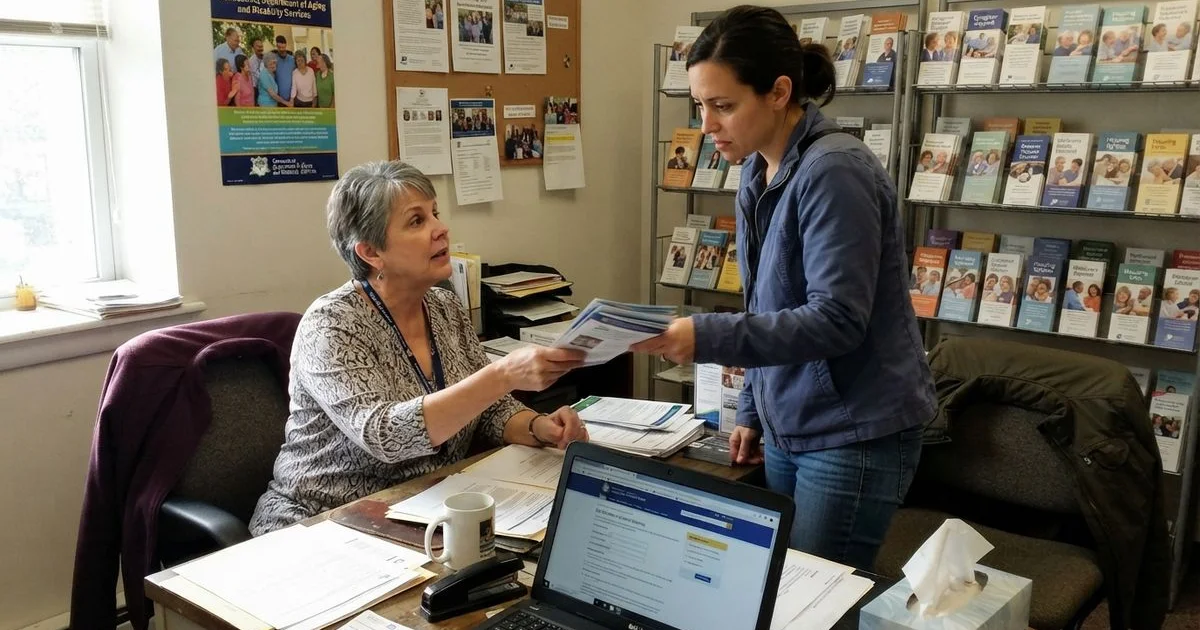
The full private-pay cost of memory care catches a lot of families off guard, and it’s easy to assume the only options are pay in full or do without. In practice, Connecticut has a network of state programs, nonprofits, and advocacy organizations that can lower costs, ease the caregiving load, or at minimum point you toward the next right step.
Where to start
The Agency on Aging of South Central Connecticut is a practical first call for families in this region, since it functions as a hub for information, referral, and care coordination covering New Haven, Hamden, Milford, Branford, Guilford, and Madison. If you’re not sure which program applies to your situation, this is a reasonable place to ask rather than researching every option individually.
The Eldercare Locator, run by the federal Administration for Community Living, works similarly at a national level, connecting families to local Area Agencies on Aging and community resources including transportation, housing, and financial assistance.
Programs that can help cover cost
The Connecticut Home Care Program for Elders (CHCPE) is a state Medicaid waiver and state-funded program that helps eligible seniors 65 and older pay for home- and community-based long-term care, which can include care coordination relevant to a dementia diagnosis, sometimes as an alternative to or bridge toward facility placement.
Veterans and surviving spouses may qualify for the VA Aid and Attendance benefit, a federal pension add-on for those needing help with daily activities, which can meaningfully offset memory care costs on top of a standard VA pension.
Table: resources at a glance
| Resource | What it offers | Cost to use |
|---|---|---|
| Agency on Aging of South Central Connecticut | Information, referral, care coordination | Free |
| Connecticut Home Care Program for Elders | Medicaid waiver for home and community care | Free to apply; eligibility-based |
| VA Aid and Attendance | Monthly benefit for veterans and spouses needing care help | Free to apply; eligibility-based |
| Alzheimer’s Association, CT Chapter | 24/7 helpline, support groups, care consultations | Free |
| Statewide Legal Services of Connecticut | Free legal advice for income-eligible seniors on elder law matters | Free (income-eligible) |
| Long-term care ombudsman | Advocacy and complaint resolution for residents | Free |

Support that isn’t about money
Not every form of help is financial. The Alzheimer’s Association, Connecticut Chapter runs a 24/7 helpline along with care consultations, family training seminars, and support groups specifically for people living with dementia and their caregivers. The Coalition for Elder Justice in Connecticut partners with the state Attorney General’s office on an elder abuse and consumer protection hotline, useful if you’re dealing with a concerning situation rather than just planning ahead.
If legal questions come up, guardianship, power of attorney, or a dispute over care, Statewide Legal Services of Connecticut offers free civil legal advice to income-eligible residents, with many seniors 60 and older qualifying regardless of standard income limits.
Trade and professional associations, as a secondary resource
Beyond state and nonprofit programs, trade associations like the Connecticut Assisted Living Association (CALA) and LeadingAge Connecticut and Rhode Island publish consumer-facing information and directories of member communities, and can be a useful secondary stop if you want a broader sense of the industry beyond a single facility’s own marketing. These groups represent providers rather than families directly, so their information leans more toward general education than individual advocacy, but they’re a reasonable supplement to the family-focused resources above, especially early on when you’re still getting oriented to what’s available.
Putting it together
Most families end up using more than one of these resources at different points, an initial call to the Agency on Aging, a Medicaid waiver application through CHCPE, ongoing support through the Alzheimer’s Association helpline. None of it replaces the eventual cost of care entirely, but together it can meaningfully reduce both the financial and emotional load. Our methodology explains how we evaluate memory care providers if you’re further along in the process, and the home page has the full list of communities we track.
This is general information, not financial or legal advice. Confirm current eligibility and application details directly with each program.
Frequently asked questions
- Is there really free help available, or is everything income-restricted?
- Some resources, like the long-term care ombudsman and the Alzheimer's Association helpline, are free regardless of income. Financial assistance programs like Medicaid waivers or legal aid typically have income or asset limits, so eligibility varies by the specific program.
- What's the fastest way to figure out what I actually qualify for?
- The Agency on Aging of South Central Connecticut and the Eldercare Locator both function as a starting point that can point you toward specific programs based on your situation, rather than requiring you to research every state and federal program individually.
- Can I get help even if I'm not ready to move my loved one into a facility yet?
- Yes. Many of these resources support caregivers directly, through respite funding, support groups, or care coordination, regardless of whether a facility move is imminent or years away.
- Are these programs specific to memory care, or general senior services?
- Most are general aging and long-term care resources rather than memory-care-specific, but they cover memory care as part of a broader mandate, and staff at these organizations are typically familiar with dementia-specific concerns even when the program itself isn't exclusively for dementia.