How to know it's time for memory care: the safety signs families miss
By Diego Cohen · Updated 2026-07-13
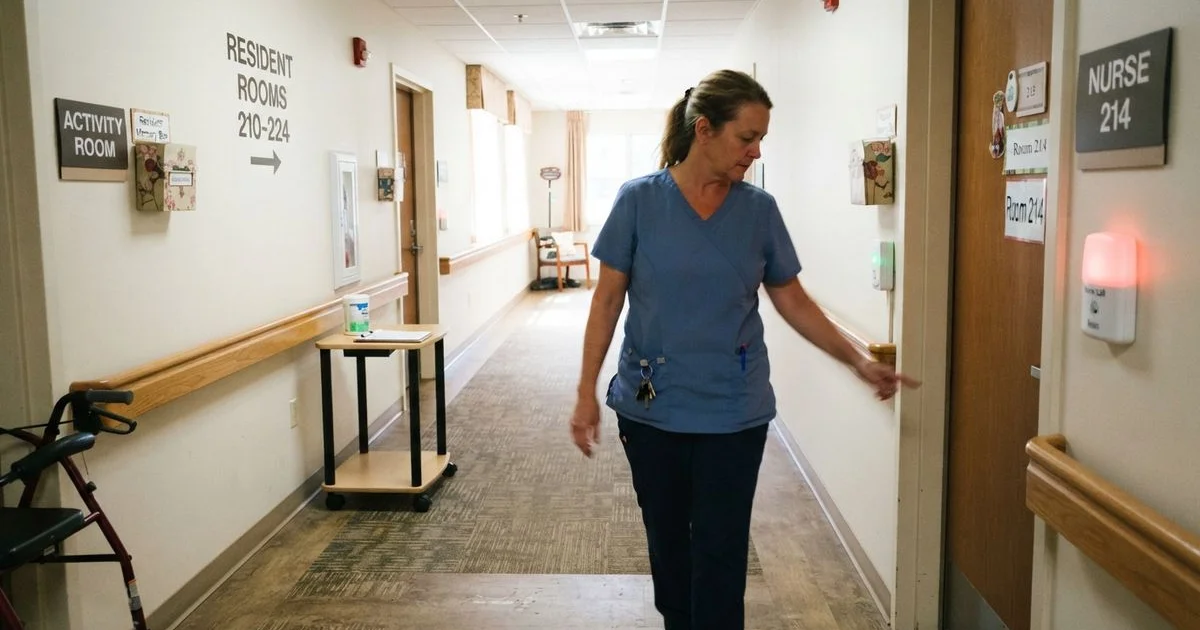
Most families do not decide to look into memory care because of a single dramatic event. It is usually a string of smaller moments that, taken together, add up to a pattern: a stove left on, a wrong turn on a walk that used to be automatic, a bruise nobody can explain. Recognizing that pattern early gives you more choices and less crisis. Waiting until there is no other option usually means less time to compare communities and a harder transition for everyone.
Alzheimer’s disease and other forms of dementia progress differently in every person, so there is no single date on the calendar that says “now.” What matters more is whether the environment around your loved one can still keep them safe, and whether the person providing care, often a spouse or adult child, is holding up under the load.
The signs that show up first
Early changes tend to affect judgment and routine tasks before they affect memory in an obvious way. Watch for missed medications or doubled doses, unpaid bills piling up, spoiled food left in the refrigerator, or the same story repeated within a single conversation. On their own, these are frustrating but not necessarily dangerous. They become a warning sign when they start to affect physical safety: a burner left on, a door left unlocked at night, a car accident that would not have happened five years ago.
If you are researching options at this stage, it is worth understanding what Alzheimer’s and dementia care actually covers, since it is a different level of support than standard assisted living and is built around exactly these kinds of judgment and safety gaps.
Safety signs that mean don’t wait
Some signs move faster than a family’s timeline for deciding. The table below breaks down common situations by how much room you typically have to plan.
| What you’re seeing | What it usually means | How urgent |
|---|---|---|
| Repeating questions, misplacing items | Early cognitive decline | Low: monitor and plan ahead |
| Missed medications, unpaid bills | Judgment and task decline | Moderate: consider added support soon |
| Getting lost on a familiar route | Disorientation risk | Moderate to high: safety plan needed |
| Wandering outside unsupervised | Elopement risk | High: act within days to weeks |
| A fall, burn, or injury while alone | Home is no longer safe alone | High: act now |
| Caregiver exhaustion or health decline | Support system is breaking down | High: act now |
That last row matters as much as anything about the person with dementia. Family caregivers frequently push through fatigue, missed sleep, and their own health problems well past the point where it is sustainable. If the caregiver’s own health is slipping, that is a safety sign too, just for a different person.
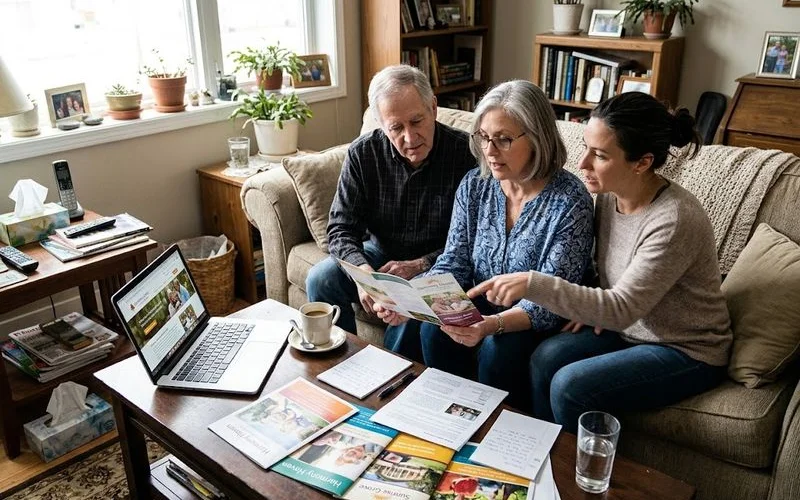
When home care can still work
Not every warning sign means a move to a residential community. Some families extend the timeline with in-home help, an adult day program for daytime supervision, or home modifications like door alarms and stove shutoffs. These work best when the person is still mostly mobile, is not showing wandering behavior, and has a caregiver who can realistically manage the rest. Once behavioral symptoms like aggression, severe sundowning, or repeated elopement attempts enter the picture, most home setups struggle to keep pace, no matter how much outside help is added.
Talking about it before it becomes a crisis
The easiest version of this conversation happens before there is an emergency, while the person can still take part in the decision. Frame it around specific incidents rather than a general decline (“I’m worried about the stove twice this month,” not “you can’t remember anything anymore”), and involve them in choosing which communities to visit if they are able to. If the conversation keeps stalling, a geriatric care manager or the person’s physician can sometimes deliver the same message with less family tension attached. Once you have a shortlist of communities to tour, understaffing is a separate risk worth checking for directly; the guide to spotting understaffing and neglect red flags covers what to ask.
Our methodology explains how we score memory care providers on staffing, safety design, and family-reported experience, which is a reasonable starting point once you decide it is time to start touring. And our home page lists every community we track across the region if you want to see the full range of options before narrowing down.
This is general information, not medical advice. Talk with your loved one’s physician or a geriatric care manager about the specific safety risks in your situation.
Frequently asked questions
- How do I know my parent needs memory care instead of just more help at home?
- Look at whether the unsafe moments are one-off or a pattern. A single missed pill is a mistake; a stove left on twice in a month, getting lost on a familiar walk, or a fall that happened because no one was there to help is a pattern that points toward a higher level of supervision than home care can reliably give.
- What if my loved one refuses to admit anything is wrong?
- This is common with dementia, since the condition itself can blunt a person's awareness of their own decline. Rather than debating the diagnosis, focus the conversation on specific safety events and frame a visit to a community as checking out options, not a decision that's already been made.
- Is wandering always a sign that home care isn't safe anymore?
- Not on its own, but wandering that leads someone outside, away from a caregiver, or unable to find their way back is a strong signal. A secured memory care setting is built specifically around preventing that outcome, which a private home usually can't replicate without major changes.
- How fast do I need to act once I notice these signs?
- It depends on severity. A pattern of near-misses gives you time to tour communities and compare options. An actual injury, a dangerous wandering incident, or a caregiver who is no longer physically able to keep someone safe usually means the timeline moves from months to weeks.