Preparing for a memory care move before it becomes an emergency
By Diego Cohen · Updated 2026-08-19
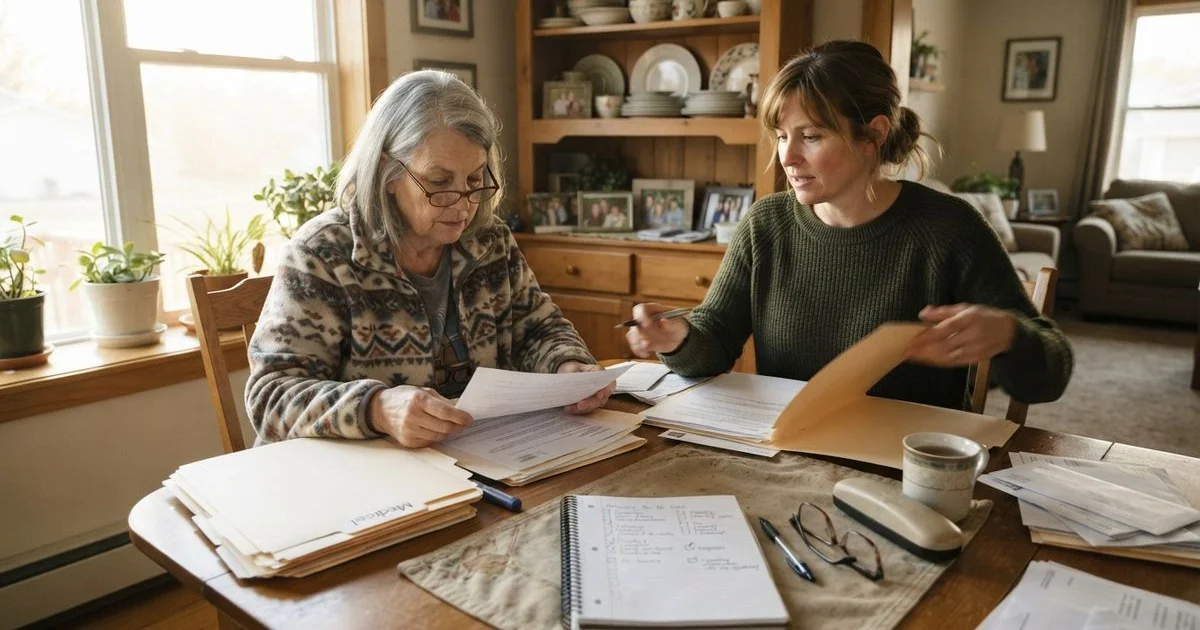
Some memory care moves happen on a family’s own timeline, after months of tours and conversations. Others get forced by a fall, a hospitalization, or a safety incident that leaves no time to prepare. You can’t control which kind you’ll face, but you can reduce how much of the second kind feels like scrambling by getting a few things in order now.
The documents worth gathering first
Start with what already exists rather than creating anything new. Locate insurance cards (Medicare, Medicaid if applicable, supplemental or long-term care insurance), a current list of medications and dosages, recent medical records, and financial account information. None of this requires a lawyer or a decision about memory care itself, just knowing where everything is and having copies accessible.
A simple way to start is a single folder, physical or digital, with copies of everything in one place rather than scattered across a parent’s home, a sibling’s filing cabinet, and a doctor’s office. Share access to that folder with at least one other family member, so the information isn’t lost or delayed if the person who usually manages it isn’t available when it’s needed most.
Legal documents that matter most
A durable power of attorney allows a designated person to make financial decisions if your loved one becomes unable to. A healthcare power of attorney or advance directive does the same for medical decisions, including consent for a memory care placement in some cases. Both require the person to have legal capacity at the time of signing, which is why waiting until a crisis hits, when capacity may already be in question, can close off this option entirely. If capacity has already declined significantly, guardianship through the courts may be the remaining path, which is a longer and more involved process best discussed with an elder law attorney.

Table: the preparation checklist
| Category | What to gather or arrange | Why it matters later |
|---|---|---|
| Legal | Power of attorney (financial and healthcare) | Enables decisions if capacity declines |
| Medical | Current medication list, recent records, physician contacts | Speeds up admission at any facility |
| Financial | Insurance policies, account information, asset overview | Needed for cost planning and eligibility applications |
| Housing | A rough sense of preferred communities, even before it’s urgent | Shortens the search if a fast decision becomes necessary |
| Family | Agreement among key decision-makers on who leads if needed | Prevents conflict or delay during a crisis |
Doing some research before you need it
You don’t have to commit to a specific community years in advance, but having a shortlist, even a loose one, from earlier research saves real time later. Knowing roughly what memory care costs in this region, which communities have availability for the level of care your loved one might eventually need, and what payment sources you’d likely use all shrink the amount of decision-making required during an actual crisis.
Building a short list without committing to anything
Preliminary research is useful precisely because it doesn’t require a decision. Set aside an hour to note two or three communities that offer the level of care your loved one might eventually need, roughly what they cost, and whether they typically have availability, without scheduling a single tour. If a fast placement does become necessary later, you’ll already know which numbers to call first instead of starting the search from zero during an already stressful week. Revisit this list every six months or so, since availability, pricing, and even ownership can change over time.
Talking to your family about this now
These conversations are easier before there’s urgency behind them. Bringing up power of attorney or a rough sense of care preferences during a calm moment tends to go better than trying to have the same conversation in a hospital hallway. If your loved one is resistant to discussing it directly, starting with practical, lower-stakes questions, like where documents are kept, can open the door without forcing a harder conversation before they’re ready for it.
Our methodology explains how we evaluate memory care communities, which is a reasonable place to start building that shortlist. You can browse every provider we track across the region from the home page.
This is general information, not legal advice. An elder law attorney can help prepare documents that are valid and complete under Connecticut law.
Frequently asked questions
- How early should I start putting this together?
- As soon as a dementia diagnosis is confirmed, or even earlier if cognitive changes are showing up but haven't been formally diagnosed. Legal documents like power of attorney require the person to have decision-making capacity at the time they're signed, so waiting too long can close that option entirely.
- What if my loved one won't discuss these decisions with me?
- Start with lower-stakes conversations, like where important documents are kept, before moving to harder topics like future care preferences. A physician or elder law attorney can sometimes facilitate this conversation more comfortably than a family member can.
- Do I need a lawyer for power of attorney, or can I do it myself?
- Connecticut has specific requirements for a valid power of attorney, and while template documents exist, an elder law attorney can make sure it actually holds up and covers healthcare decisions as well as financial ones, which generic templates don't always address adequately.
- What's the single most useful thing to do first?
- Locate and organize existing documents, insurance policies, IDs, financial account information, before anything else. Even without new legal paperwork, simply knowing where everything is saves enormous time and stress if a fast placement becomes necessary.